You cannot tightrope walk by watching this YouTube clip. (But the person who created it is learning!)
You cannot watch and watch and watch, read and read and read, talk and talk and talk, think and think and think about tightrope walking and say you are actually doing it.
The doing of the thing is the thing and that happens in Spacetime. And as that link you just read past will tell you, “Spacetimes are the arenas where all physical events take place.” Where you and your physical body are located right here, right now. HERE = the 3 to 24 (it’s debatable) spatial dimensions. NOW = the 1 temporal dimension (apparent agreement.)
OK, the watching, reading, talking and thinking will help line yourself up right for the doing, especially if you try to be fully present as you watch closely, read the right sources, talk to the right crowds, think about it in an associative and retentive manner, and maybe – or even especially – run through the related physical motions. They will most certainly lead you to better observations, reading material, conversations and cognitions galore.
Rehearsals, all!
And if they lead you to the doing part, you might be so well-rehearsed in mind, body and spirit, you surprise yourself with how simple and honest it feels. Honey, that’s good rehearsing! As Olympic Gold Medal figure skater Scott Hamilton has reportedly said, it’s also “skating stupid.” The doing falls out of you because you have successfully absorbed the Preparatory. The watching, reading, talking, thinking, even the pantomiming, have transitioned you to the Repertory.
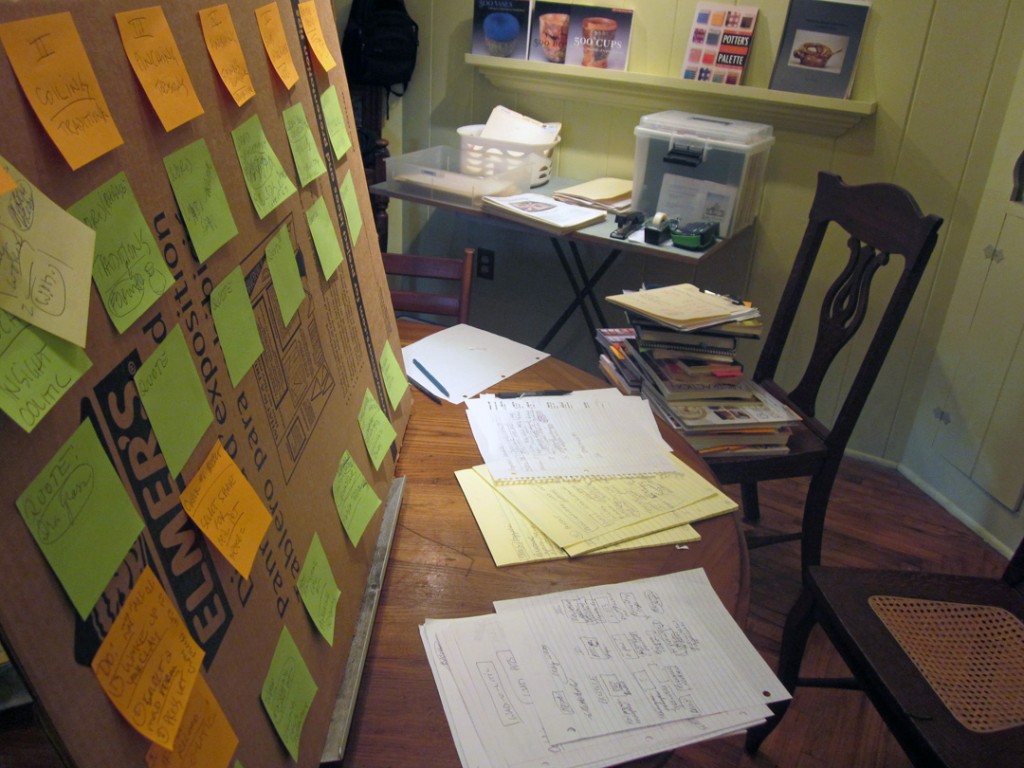
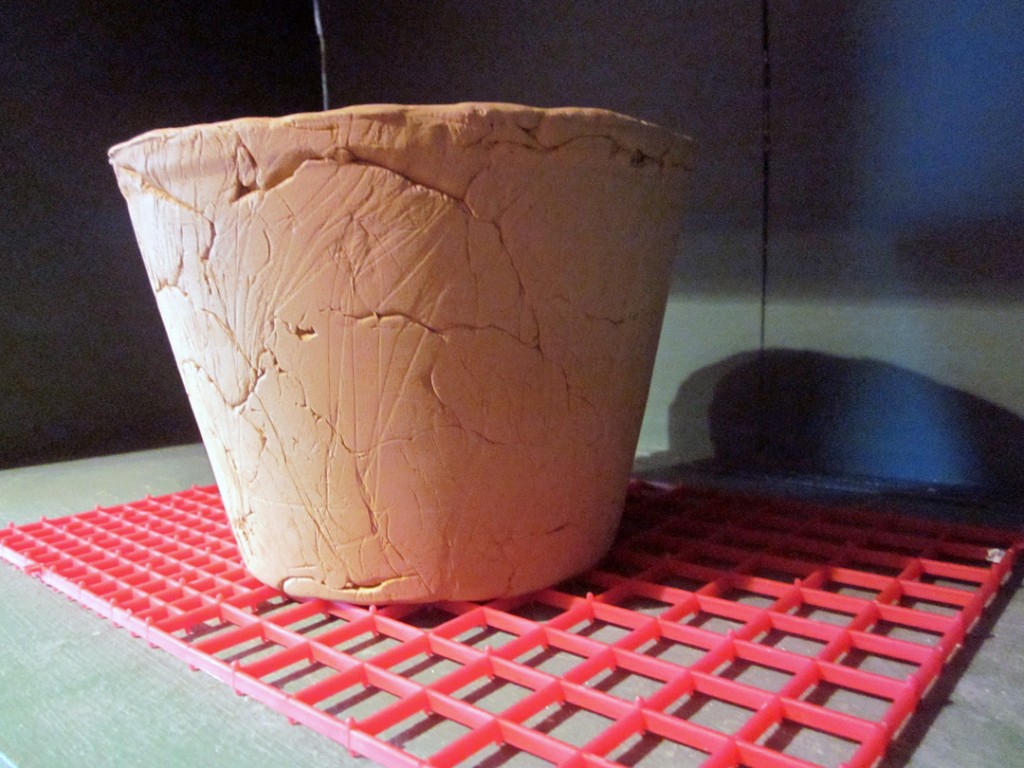
Preparatory. That’s still where I’m at with designing my Beginning Ceramic Handbuilding class. The actions I’m involved with right now are definitely not the real teaching. All this gathering, editing, organizing and questioning are totally necessary to manage a good run when the time comes. If you want more of what’s going into that, my recent two posts here and here do some pretty elegant expository hand-wringing about “my process,” such as it is.
There is, however, a larger motivation for aligning myself with the vital differences between preparatory/repertory – or theory/practice – and that’s because the students who will come to study with me will experience their own version of it. How can I guide them as they transit the continuum from hearing, reading, watching, etc. to doing?
We both know that all the talking and reading and showing and sharing we do are but the foundational intro or interlude to touching the clay and moving it around with intention. Hell, we all can practice the valuable Coeleen Kiebert exercise of physically assuming the positions of our pots and sculptures, but it’s ONLY when we mold, pound, coil, pinch, carve, smooth, sponge, brush that we deeply know what this clay stuff is for ourselves.
Some of these beginners will undoubtedly run gladly off in many directions, full of joyful assumptions. Wanting to do it all at once perfectly, attempting to swallow the clay universe in one gulp. Acting as if Spacetime didn’t include the sequential time part. That’s where I think the heart of my guide role is: pacing the doing. Intertwining the cognitive with the active in our tiny corner of the Wide World of Clay. Supplying a studied but ultimately idiosyncratic version of a sequential scaffold for them to climb around on, lift by lift.
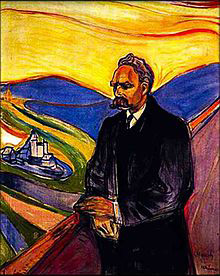
Friedrich Nietzsche (that’s him painted by Edvard Munch in 1906 in the top illustration) said it brilliantly, “He who would learn to fly one day must first learn to stand and walk and run and climb and dance; you cannot fly into flying.”
Clay work taught me patience and presence. Well, not so much taught as forced them upon me, as I was definitely of the Fly Into Flying bent as a newbie. My endless groundings and crashes lasted years more than perhaps needed. Could I have spent more time on effective Preparation? Could I have had better scaffolding? Maybe. Then again, maybe not. Because of my experiences, I don’t expect to save any artist from their personal process. But I do believe the least I can do as their flight instructor is to shed a bright and true spotlight onto the highwire act and the ladder up to it in our spacetime arena and encourage them to give it a real try.
Class Nuts and Bolts: 6 Thursdays, 2-5pm, Session I: Feb 23 to March 29, Session II (with different techniques and projects): April 12 – May 17. Held at the Santa Cruz Mountains Art Center, 9341 Mill Street, Ben Lomond, CA, 831-3364ART.
If you’re so inclined, you can call or register online at www.MountainArtCenter.org. Class is $180 for Members/$200 Non-Members.
Next time: Those visual aids! (Yes, I know I promised them last post and the post before. Clay takes an uncertain amount of time and they’re just not done yet! Think I would know by now, do ya?)